Follow the Rain: A November Rethink of the Downpipe Corner
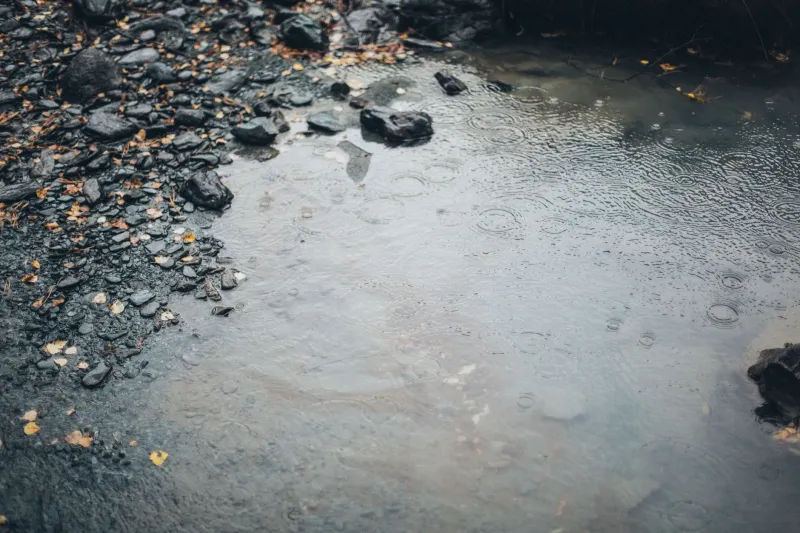
The rain has a way of showing you where your garden actually drains. Stand at the back door during a heavy November shower and watch the downpipe. Water leaves the shoe, hits the border and fans out in a muddy little arc. Within minutes that patch is darker than everything around it. By evening it is the dampest square metre in the garden — and one of the most reliable places for slugs to sit out the wet.
Most slug advice concentrates on the open border: the hostas, the seedlings, the tender lettuce. The downpipe corner gets ignored because it is not really a planting area. It is plumbing. But plumbing leaks, overflows and splashes, and slugs are very good at turning a maintenance detail into a five-star shelter.
Start with the splash map, not the slug
Before you buy anything, spend ten minutes watching where the water actually goes. A downpipe shoe usually throws water 30–60 cm from the wall. A water-butt overflow can send a thin stream further, especially if it has been running all night. A drain gully sits at the low point and holds a shallow reservoir after every shower.
That wet footprint is the splash zone. It stays damp longer than the rest of the border, it keeps mulch and leaf litter soggy, and it often sits against a wall or fence — exactly the kind of cool, dark edge slugs use as a travel route. The gully is worse. It is a ready-made trench with a lid, and the grate gives slugs somewhere to slip through.
In November, this matters more than in summer. The border is settling down, leaves are gathering, and the soil is already near capacity. A downpipe that dribbles into the same spot for weeks keeps that corner in a state of permanent damp just as the rest of the garden begins to dry out between showers. It is not a dramatic problem. It is a small, persistent one.
The gravel apron is a drying mat, not a wall
The most useful fix is also the least glamorous. Clear the mulch and leaf litter from the splash zone, then lay a shallow apron of gravel where the water lands. A width of 30–45 cm and a depth of about 5 cm is usually enough for a domestic downpipe. Ten to twenty millimetre gravel is a good compromise: coarse enough to drain, fine enough to walk on.
Be clear about what the gravel is doing. It is not a magic barrier that slugs refuse to cross. It is a drainage layer that stops the soil surface staying plastered and puddled. Dry gravel also makes it easier to see what is happening after rain. If you find slugs sitting on it, you have learned something useful: the shelter is nearby, not on the gravel itself.
Where the downpipe discharges, fit a shoe that directs water onto the apron rather than into the soil. If you have a water butt, send the overflow into a gravel-filled channel or a simple soakaway away from the wall. And check the gully twice this month. Clear the grate, lift it if it is safe to do so, and remove the silt and leaves that turn a drain into a damp pocket.
Move the pots before you move the problem
Downpipe corners attract pots. They are handy places for a bay tree, a fern, a couple of winter pansies. But a pot next to a wet wall creates a sheltered cavity underneath, and a saucer creates a shallow pond. That is not a slug deterrent; it is a slug hotel with room service.
Raise pots on feet, empty saucers after rain, and pull them at least 30 cm away from the splash zone. If a pot is too heavy to move, turn it slightly and clear the debris beneath. In November, the aim is not to create a bare, hostile corner. It is to stop one small area being permanently wet, dark and cluttered.
The twenty-minute after-rain walk
This is the habit that makes the rest work. After a decent spell of rain, put on boots and walk the wet edges of the garden. Check the downpipe apron, the water-butt overflow, the gully and the pots nearby. Lift a pot rim. Look under the lip of the drain cover. You are not conducting a census; you are reading the conditions.
If you find slugs gathered in the same spot every time, the fix is usually environmental: improve drainage, move the shelter, stop the water running into the border. If you find very few, leave it alone. Tolerance is part of a chemical-conscious garden, and a damp corner that is not causing damage does not need to be conquered.
What not to do in November
Do not bury the problem under a thick winter mulch. Mulch is useful on drained borders, but a wet downpipe corner does not need another layer of moisture-holding material. Do not stack pots or leave saucers full. Do not use salt as a slug deterrent; it damages soil, plants and concrete, and it is especially pointless in a wet zone. And if you use slug pellets anywhere, read the label carefully and keep them away from splash zones, gullies and paths where pets and wildlife pass. Many gardeners now prefer barriers, traps and habitat changes, especially in wet weather when pellets degrade quickly.
A small edit with a long reach
The downpipe corner is never going to be the prettiest part of the garden. But it is one of the few places where a bag of gravel, a pot foot and a ten-minute after-rain check can change the local slug population without touching the rest of the border. Follow the rain this November. It will show you exactly where to start.