The Doorstep Water Line: Festive Pots That Don't Double as Slug Hotels
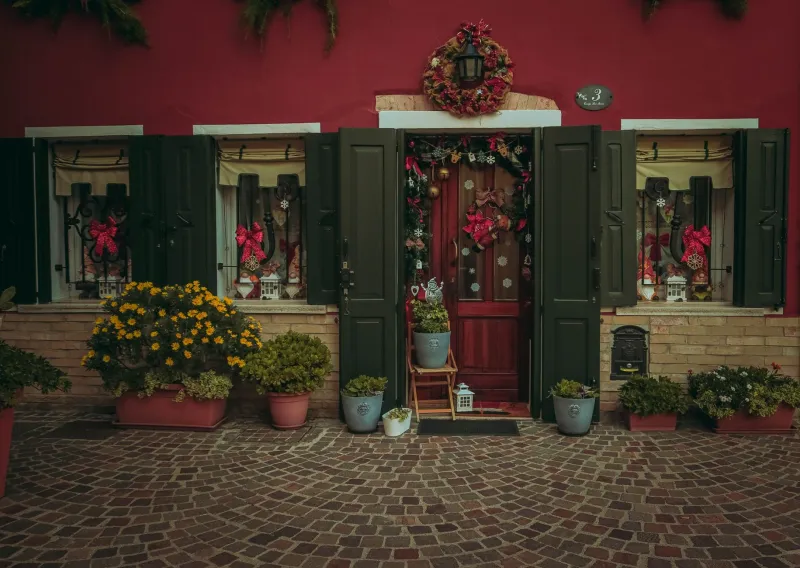
There's a particular pleasure in a parade of pots along the front path in late November. A couple of hellebores, something evergreen, a bit of heather, maybe a small conifer nicked from the back garden because the garden centre wanted fifteen quid for it. It looks like you've made an effort. It also, unfortunately, looks like a very nice place to spend the winter if you're a slug.
This isn't a reason to give up on the doorstep display. It's a reason to think about where the water goes, because the water is the whole story. Every pot on that step is a small, sheltered, permanently humid world with a roof overhead and a warm wall behind it. Get the drainage and the positioning right and you'll cut the population considerably without sprinkling anything dubious near the front door.
The wettest address in the garden
A doorstep is a strange microclimate. It sits in the rain shadow of the porch or the eaves, so it gets less direct rainfall than the border — but it also gets the drips, the splashback off paving, and the run-off from the sill above. Wind is reduced. Heat leaks out of the house wall. The paving underneath stays damp for days after everything else has dried.
That combination — shelter, warmth, constant moisture — is precisely what slugs are looking for in December. They aren't marching in from the lawn. They're already there, in the base of the pot, under the rim, behind the hessian wrap, in the little hollow foot that the moulding left.
So the festive display needs a slightly different set of rules from the rest of the garden. Less about deterrence, more about not building them a bungalow.
Lift everything. Yes, everything.
The single most useful thing you can do this month is get every doorstep pot off the ground. Not tipped onto its side, not shifted six inches — lifted, with air moving underneath.
Proper pot feet are ideal. Two strips of timber work. A couple of bricks laid flat do the job. What you're trying to avoid is the flat-bottomed pot sitting flush on paving with a film of water trapped beneath it, because that's the classic winter hiding place: dark, wet, and undisturbed for weeks.
If a pot is too heavy to lift on your own — a big stoneware planter, say — slide it forward onto a couple of offcuts and leave it there. Do it once now, before the frost makes the whole job miserable.
Saucers: the awkward conversation
Saucers are brilliant in July. In December they are, functionally, small slug paddling pools.
If you can, take them off for winter and let the pot drain freely onto the paving. If the pot is under cover and needs the saucer to catch drips, empty it weekly — five seconds with a watering can, tipped down the drain — and check the inside rim of the saucer while you're at it. That lip is a favourite spot for slug eggs, which look like tiny clusters of clear jelly and are easy to miss against wet terracotta.
One more thing: check that the drainage hole actually drains. Crocks over the hole, a compacted layer of old compost, or a root ball that has filled the base can all turn a pot into a bucket. A skewer pushed up through the hole is a quick test.
Hidden rims, hollow bases and other design flaws
Cheap plastic pots often have a hollow ring around the base or a double-skinned rim, and both hold water. Glazed pots sometimes have a moulded foot with a cavity inside it. Wicker baskets and hessian wraps are worse — lovely to look at, permanently damp, and almost impossible to check without taking them off.
Put each container on its side, once, this week. Tap the base. Look into the rim. If there's a cavity, tip out whatever's in it and leave the pot to dry for an hour in the garage before it goes back out. It's a five-minute job per pot and it's worth more than any barrier product you could buy.
The decorative mulch problem
Here's where the festive look and the slug-proofing pull in opposite directions. Moss, bark chip, coir, fresh sphagnum and those bags of fake snow all do the same thing: they hold moisture right up against the crown of the plant. That's the exact environment a slug wants in December.
A thin layer of horticultural grit is a better bet. It looks tidy, it dries out fast, and it doesn't provide a damp blanket. Gravel works too, though it's heavy for a doorstep pot. If you've already bought the moss and you love it, keep it shallow — a centimetre or so — and don't let it sit in a puddle.
Fairy lights, cables and the wicker skirt
A string of outdoor lights wound through a pot is fine. The cable running from the porch to the socket is another matter: it creates a long, damp tunnel along the base of the wall, which is precisely the sort of covered highway slugs enjoy. Run cables up and over where you can, or lift them clear of the ground with a couple of clips.
And if you've wrapped a pot in a hessian skirt or a wicker sleeve for the look of it, take it off once a fortnight, have a look underneath, and put it back. That's the whole routine. No drama.
Plants that carry their own weight
Some winter plants are slug magnets and some are broadly left alone. Cyclamen and primrose are, sadly, in the first group — gorgeous, but they will get nibbled by December. Hellebores, skimmia, winter heather, carex, euonymus and most ivies cope much better.
A combination that works well by a door: a dark-leafed carex in the middle, a skimmia for the buds and scent, and a small ivy or gaultheria trailing over the edge, all in a grit-topped pot on feet. It looks deliberate, it survives the wet, and it doesn't invite anyone in.
Gifted containers get a week in quarantine
If a pot arrives as a present — a supermarket cyclamen in a foil wrap, a garden centre planter with a bow on it — don't put it straight on the step with the others. Unwrap it, stand it on a dry surface off the ground somewhere sheltered for a few days, and check the base and rim before it joins the parade. It's the same principle as checking a new plant from anywhere else. Slugs are excellent stowaways and December postage is slow enough already.
The five-minute Sunday circuit
Through late November and December, one lap of the doorstep pots each week is enough. Lift. Tip. Look. Re-set. Empty the saucers. Wipe out the hollow feet. Check the plants for fresh damage. If a pot is sitting in a puddle that never drains, move it — half a metre to the left, out of the drip line, is often all it takes.
No pellets scattered across the front step where the dog and the postman go. No elaborate barriers that fail the moment it rains. Just dry feet, clear drainage and a bit of grit where the moss wanted to go. The display still looks festive. It just stops being a hotel.