Cold Snap, Warm Corners: Why November Frost Rarely Ends the Slug Story
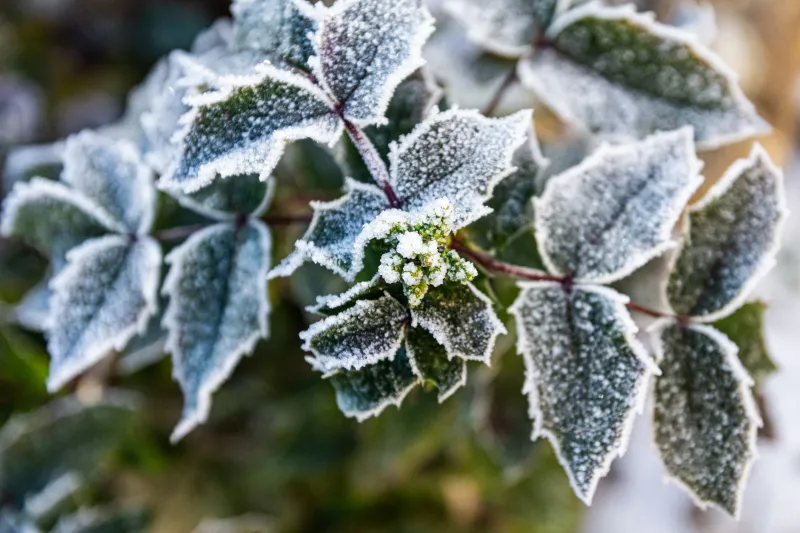
Every November, the same hopeful thought crosses a thousand UK gardens: there's a minus sign in the forecast, so the slugs must be finished. It is a comforting idea. It is also only part of the story. A hard frost is not a garden-wide reset button. It is a filter — one that removes some slugs, leaves plenty of others, and quietly rearranges the survivors' plans.
The comforting myth of the killer frost
A sharp overnight freeze does hurt slugs. They are soft-bodied, moisture-rich creatures, and exposed individuals caught on a cold path or a bare bed can die. That much is real. But slugs are not sitting out in the open waiting for the weather to finish them. By the time the first proper air frost arrives, most have already voted with their bodies and moved into the garden's quieter corners.
The mistake is imagining the whole population as one layer on the soil surface. In reality, a UK garden in November is a patchwork of microclimates. The middle of a lawn might dip well below zero while the base of a south-facing wall, a greenhouse shelf or a compost heap stays surprisingly mild. Frost is uneven, and so is its effect.
What the cold actually does to slugs and eggs
Adult slugs vary in their tolerance. Some species and life stages are more exposed than others, and a repeated freeze-thaw cycle is harder on them than a single cold night. Juveniles and adults caught away from shelter are the most likely to suffer. But many adults simply go deeper, squeeze under cover or slow down until conditions improve.
Eggs are a different matter. Slug eggs are small, gelatinous clusters, usually laid in damp soil, under pots or in loose organic matter. They need moisture, and they are vulnerable to drying out and to hard, prolonged freezing. A cold snap can certainly reduce the number that hatch. But eggs tucked into a sheltered cold frame, a deep compost heap or the soil beneath a wall can come through far better than we would like. Frost thins the ranks; it rarely clears the register.
That is why a frosty November is not a reason to relax completely. The spring population is shaped by how many adults, juveniles and eggs make it through the winter — not by whether the birdbath iced over last Tuesday.
The sheltered spots that keep the story going
If you want to know where slugs are spending November, stop looking at the open border and start looking at the edges. The usual suspects are the ones that stay damp and insulated: under patio pots, beneath cold frames, around shed bases, in the loose leaves against a fence, under log piles and in the warm, dark middle of a compost heap. Greenhouses and polytunnels are obvious refuges too, especially where condensation lingers.
These places matter because they are exactly where many of us store tender plants, autumn cuttings and overwintering pots. The frost outside may be doing some of the work, but the sheltered shelf inside is doing none at all. That is not a reason to panic. It is a reason to look before you water, move a pot or assume the cold has solved the problem for you.
A frost is not a species-wide clear-out
It also helps to remember that slugs are not one uniform enemy. Different UK species have different life cycles, and some are more tolerant of cool, wet conditions than others. Some overwinter as adults, some as eggs, and some are already part of the annual cycle that ends with the cold. A frost may hit one group harder than another while leaving the garden's overall slug pressure largely intact.
That is why the old idea of a good hard frost as natural pest control is too simple. It can be a useful ally, especially if it dries up damp surface shelters and interrupts egg-laying. But it is not a treatment. It is weather.
Gentle November habits that still earn their keep
So what should a chemical-conscious gardener actually do? Start with observation. On a mild, damp evening after a frost, take a torch around the pots, the cold frame and the back of the border. You are not on a killing spree; you are reading the garden. If slugs are active in sheltered spots, you know where to focus.
Then reduce the welcome mat without stripping the garden bare. Lift pots that sit directly on damp paving, clear soggy leaf drifts away from the stems of vulnerable plants, and let air move around cold frames and greenhouse staging. Move saucers out of the way if they are holding water. Check that autumn mulch is not piled up against soft plant crowns. None of this is dramatic, and none of it requires chemicals.
Where plants are genuinely at risk, use physical barriers around individual pots or favourite seedlings rather than treating whole borders. Hand-picking at dusk is still one of the most targeted methods available, especially in the damp pockets where slugs gather. Encourage the garden's own predators — ground beetles, centipedes, birds and frogs — by leaving some rough, undisturbed corners elsewhere. A garden that is tidy everywhere is often a garden with fewer places for the creatures that eat slugs.
At No Slug, the aim isn't to declare war on the mollusc world. It is to make the border less inviting where it matters and to keep young plants out of harm's way. November is a good time for that work precisely because everything is slower. You can see the damp corners, the crowded pots and the leaf piles that will still be there in February.
The realistic takeaway
Will the first frost slay your slugs? Some of them, yes — the unlucky ones caught in the wrong place at the wrong time. But it will not empty the border, and it will not sterilise the cold frame. The more useful question is where the survivors are sheltering, and whether those places are sitting right next to the plants you care about.
Treat frost as a filter, not a finish line. Keep watching the damp corners, keep air moving, and keep your expectations steady. The slugs that matter in spring 2026 are not the ones frozen on the path in November; they are the ones tucked under the pot by the back door.